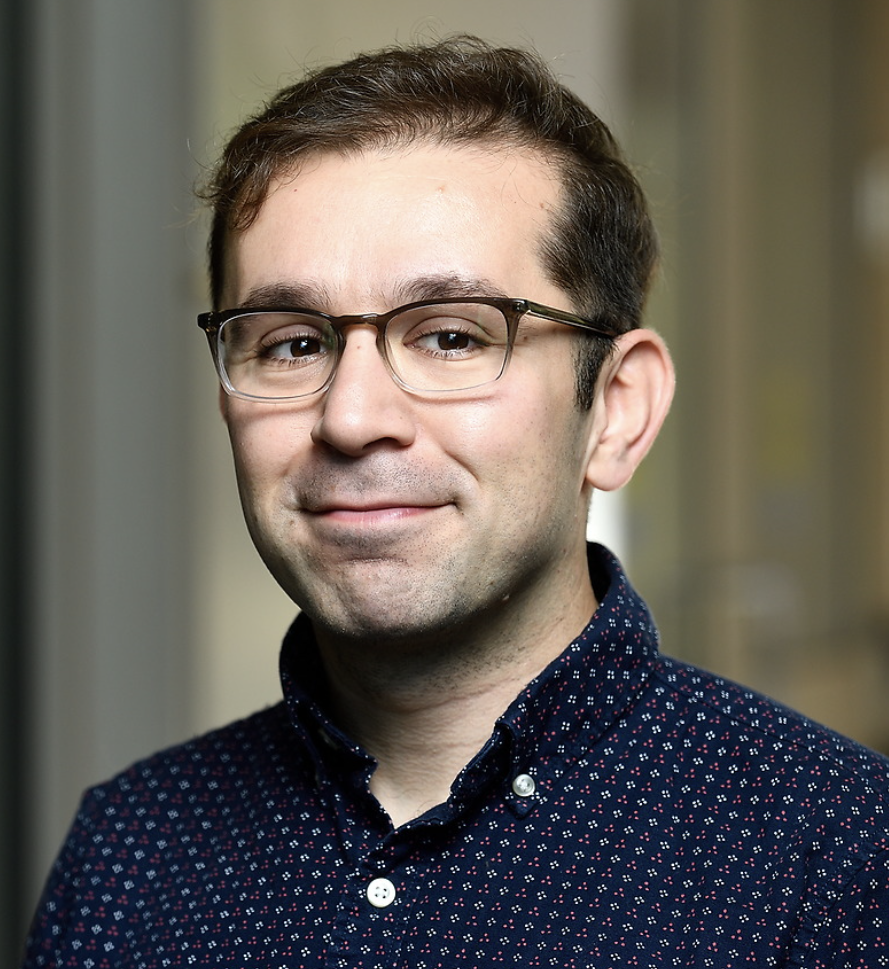
Daniel Khashabi
Assistant Professor, Department of Computer Science, Johns Hopkins University
Secondary affiliations: Center for Language and Speech Processing, Data Science and AI Institute, Institute for Assured Autonomy, Institute for Data-Intensive Engineering and Science.
Office: NE366, Marbury building
Email: danielk@jhu.edu
Research Themes
I am broadly interested in making reasoning-driven AI systems more helpful, reliable, and efficient. As these systems increasingly engage in reasoning and creative discovery, their impact hinges on balancing open-ended exploration with grounded trustworthiness. At the core of this agenda lies a tension: creative reasoning thrives on revealing novel connections and deep structural parallels across distant domains, yet it is inherently prone to false associations that can undermine, rather than enhance, human productivity. My work draws on algorithmic and statistical tools to develop computational frameworks to harness the benefits of creative reasoning while remaining transparent, verifiable, and aligned with human values—enabling trustworthy, AI-driven discovery.
I have pursued this vision along three complementary axes:
- Understanding the foundations: What fundamental principles govern the intelligent behavior that emerges from large-scale training? And can we use these insights as guiding principles of scaling?
- Reasoning, communication and interaction: How can we amplify AI's capacity for reasoning across tasks, contexts, and interactions with the world? How can we characterize the trade-off between generality vs. specialization (sticking to what user wants) in adaptive systems?
- Safety, oversight and evaluation: How can oversight mechanisms (e.g., debate, red teaming, verification) be formalized and automated at scale? How can AI systems balance autonomy with auditing and safety mechanisms to ensure human trust?
Our research is driven by a key real application: accelerating scientific discovery in an era where knowledge grows faster than any individual can absorb.
Most of my research is aligned with the following research communities: natural language processing (ACL, NAACL, EMNLP), machine learning and AI (COLM, ICLR, NeurIPS, ICML, AAAI, IJCAI).
Previously, I was a post-doc at Allen Institute for AI working with Yejin Choi, Hanna Hajishirzi and Ashish Sabharwal. Before my post-doc, I was a graduate student at Penn/UIUC advised by Dan Roth.
Due to the large number of emails I receive, I cannot respond to every email individually. Please review the information below before contacting me.
- Current JHU students: If you are an undergraduate or masters student and would like to work on research with my group, please fill out this form. The minimum time commitment is 15 hours per week for six months.
- Prospective visiting students: Please fill out the above form. For visiting graduate students, the minimum length of a visit is six months.
- Prospective postdocs: Please email me directly with your CV and I will get back to you if there is an opportunity that is a good fit.
- Prospective graduate students: Please apply through the system and list me as a potential advisor in your application. There is no need to contact me.
Recent Talks
- 2026, Rice University CS Colloquium (slides)
- 2026, Google (slides, recording)
- 2026, Engineering Summer Institute (slides)
- 2026, Apple Workshop on Reasoning and Planning (slides)
- 2026, Microsoft (slides)
- 2026, Archaeology, Ancient History, and AI Workshop (slides)
- 2025, JHU MLxAstro/Cosmo Meeting (slides)
- 2025, Apple Workshop on Reasoning and Planning (slides)
- 2025, University of Pennsylvania Computational Linguistics lunch (slides)
- 2024, University of Cambridge the Language Technology Lab seminar (slides)
- 2024, Oracle Labs ML seminar (slides)
- 2024, Tel Aviv NLP seminar (slides)
- 2024, Forum on “Engineered AI Systems” (slides)
- 2024, Keynote at “Engineering for Professionals” quarterly meeting (slides)
- 2024, Workshop on “LLMs for Healthy Aging” (slides)
- 2023, NYU “Text-as-Data” talk series (slides)
- 2023, Hopkins Center for Language and Speech Technologies seminar (recording)
- 2023, Hopkins Electrical Engineering department seminars (slides)
- 2023, Amazon “Human in the Loop” seminar
- 2023, Hopkins Center for Health Security seminars (slides)
- 2023, UMD Computational Linguistics seminar (slides)
- 2023, Applied Physics Lab, Intelligent Systems Center seminars
- 2022, University of Tehran NLP seminar
- 2021, University of Glasgow IR seminar (slides)
- 2021, Johns Hopkins University (slides)
- 2021, Google AI (slides)
- 2021, UCLA Big Data and ML seminar (slides)
- 2021, USC NLP seminar (slides)
- 2020, Tel Aviv University NLP seminar (slides)
- 2019, The Workshop on Progress Towards the Holy Grail, CP 2019 (slides)
- 2019, CMU LTI seminar (slides)
- 2018, NYU NLP seminar – Reasoning-Driven Question Answering
- 2018, Stanford NLP seminar (slides)
- 2018, Mid-Atlantic Student Colloquium on Speech, Language and Learning (slides)
Teaching
- CS 601.471/671, NLP: Self-supervised Models: Spring 2023, Spring 2024, Spring 2025, Fall 2026
- CS 601.771, Advances in Self-supervised Models: Fall 2022, Fall 2024, Fall 2025
Intelligence Amplification Lab (IALab)
PhD students:
- Adam Byerly
- Jack Jingyu Zhang – co-advised w/ Benjamin Van Durme
- Andrew Wang – co-advised w/ Nick Andrews
- Jiefu Ou – co-advised w/ Benjamin Van Durme
- Tianjian Li
- Kaiser Sun – co-advised w/ Mark Dredze
- Hannah Gonzalez – co-advised w/ Benjamin Van Durme
- Zheyuan “Brian” Zhang – co-advised w/ Tianmin Shu
- Austen Liao – co-advised w/ Benjamin Van Durme
- Tajamul Ashraf – co-advised w/ Vishal Patel
- Ziyang Huang – co-advised w/ Ben Van Durme
Here’s a team photo from our recent fun outing.
We’re also grateful to collaborate with a number of exceptional PhD, MS and undergraduate students who are not listed here.